Delving into the realm of top programming languages for software development 2024 sets the stage for an enlightening journey, offering readers a comprehensive look at the landscape ahead.
As we navigate through the intricacies of programming languages and their impact on software development, we uncover key insights that shape the future of this dynamic field.
Top Programming Languages for Software Development 2024
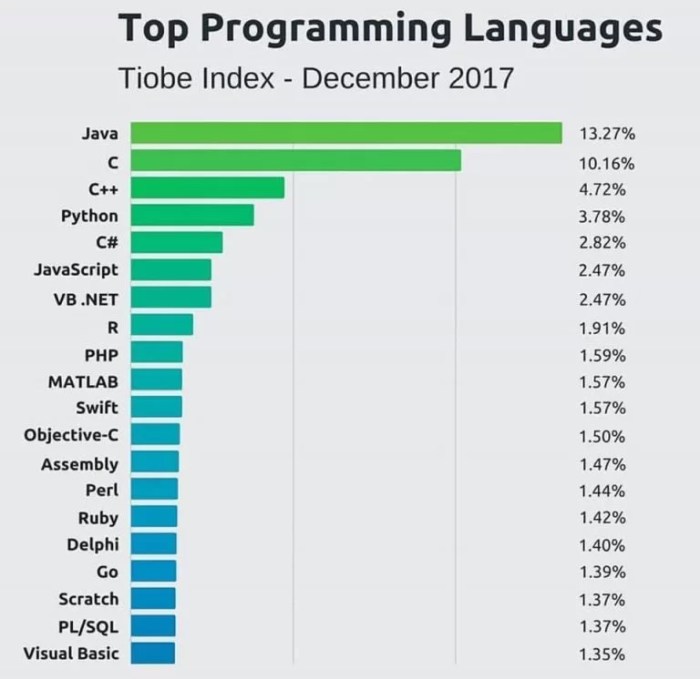
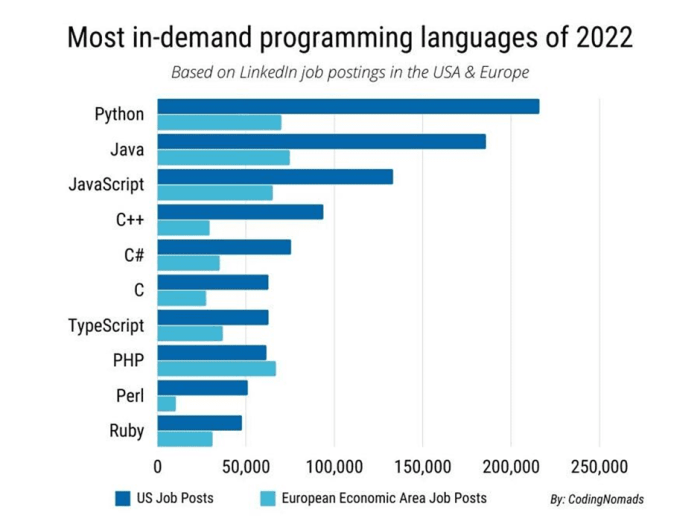
When it comes to software development, choosing the right programming language is crucial for success. In 2024, the top programming languages are determined by a combination of factors such as versatility, performance, ease of use, community support, and industry demand.
Criteria for Selecting the Top Programming Languages
- Performance: Languages that offer high performance and efficiency are favored for software development.
- Versatility: Languages that can be used across different platforms and for various applications are highly valued.
- Community Support: Programming languages with active and engaged communities often have better resources and support available.
- Industry Demand: Languages that are in high demand by employers and in the tech industry are prioritized.
Trends Influencing the Choice of Programming Languages
- Artificial Intelligence and Machine Learning: Languages like Python and R are popular choices for AI and ML development.
- Web Development: JavaScript continues to be a dominant language for front-end and back-end web development.
- Data Science: Languages like Python and SQL are widely used for data analysis and visualization.
- Blockchain Development: Languages like Solidity are gaining traction in the blockchain space.
Popularity and Usage of Different Programming Languages
- Python: Known for its simplicity and readability, Python is widely used in AI, data science, and web development.
- JavaScript: Essential for web development, JavaScript is used for building interactive websites and web applications.
- Java: A versatile language, Java is used in enterprise applications, mobile development, and big data processing.
- C++: Known for its performance, C++ is commonly used in system programming, game development, and high-performance applications.
- C#: Developed by Microsoft, C# is popular for building Windows applications, games, and enterprise software.
Mobile App Development
Mobile app development plays a crucial role in today’s digital landscape, allowing businesses and individuals to reach a wider audience and provide convenient solutions. Programming languages are the building blocks of mobile app development, determining the functionality, performance, and user experience of the app.
Role of Programming Languages in Mobile App Development
Programming languages are essential in mobile app development as they dictate how the app functions and interacts with the device. Different languages offer various features and capabilities, influencing the efficiency of the development process and the final product.
- Java: Known for its versatility and compatibility, Java is widely used for Android app development. It offers a robust development environment and strong community support.
- Swift: Developed by Apple, Swift is the preferred choice for iOS app development. It provides a modern and concise syntax, enhancing developer productivity.
- Kotlin: An alternative to Java for Android development, Kotlin offers a more concise and expressive syntax, reducing the likelihood of errors and improving code readability.
Impact of Programming Languages on App Performance
The choice of programming language can significantly impact app performance, affecting factors such as speed, responsiveness, and efficiency. Optimized code written in a language suitable for the platform can enhance the user experience and ensure smooth operation of the app.
Optimizing code for performance can lead to faster load times and smoother navigation within the app.
Challenges Faced in Mobile App Development
Developing mobile apps presents various challenges, including platform fragmentation, device compatibility, security vulnerabilities, and performance optimization. Overcoming these obstacles requires a deep understanding of programming languages, development frameworks, and best practices.
- Platform Fragmentation: Ensuring app compatibility across different devices, screen sizes, and operating systems can be challenging, requiring thorough testing and optimization.
- Security Vulnerabilities: Protecting user data and ensuring app security is essential, necessitating the implementation of secure coding practices and regular security updates.
- Performance Optimization: Improving app performance through efficient code, resource management, and optimization techniques is crucial for delivering a seamless user experience.
Software Development
In software development, programming languages play a crucial role in creating applications, programs, and systems that meet the needs of users and businesses. The choice of programming language can significantly impact the efficiency, scalability, and maintainability of the software being developed.
Relationship between Programming Languages and Software Development
Programming languages serve as the building blocks for software development, allowing developers to write code that instructs computers to perform specific tasks. The choice of programming language can influence factors such as development time, performance, and ease of maintenance.
Software Development Lifecycle and Role of Programming Languages
Throughout the software development lifecycle, programming languages are used at various stages such as planning, design, implementation, testing, and maintenance. Each stage requires different programming languages to effectively address the specific requirements and challenges encountered.
Programming Languages and Software Scalability and Maintenance
Programming languages impact software scalability by determining how easily a software system can adapt to increased demands and workload. Additionally, the choice of programming language can affect the ease of maintenance, updates, and modifications to the software over time.
Comparison of Programming Languages for Different Software Development Projects
Different types of software development projects require specific programming languages based on factors such as project complexity, performance requirements, target platform, and developer expertise. For example, web development projects may utilize languages like JavaScript, Python, or Ruby, while mobile app development often involves languages such as Java, Swift, or Kotlin.
Cybersecurity
Programming languages play a crucial role in cybersecurity, as they are used to develop secure software, implement encryption algorithms, and create security protocols to protect sensitive data from cyber threats.
Importance of Programming Languages in Cybersecurity
Programming languages are essential in cybersecurity for developing secure applications, implementing security measures, and detecting vulnerabilities in software systems. By using programming languages, developers can create robust code that can withstand cyber attacks and prevent unauthorized access to data.
- Programming languages help cybersecurity professionals in identifying and fixing security loopholes in software applications.
- They are used to implement encryption techniques to secure data transmission and storage.
- Programming languages enable the development of security tools and frameworks to enhance overall cybersecurity measures.
Programming Languages in Developing Secure Software
Different programming languages have varying levels of security features and capabilities when it comes to developing secure software. Some languages are more prone to vulnerabilities, while others offer built-in security mechanisms to prevent attacks.
- Java: Known for its strong security features and platform independence, Java is commonly used in developing secure applications.
- Python: Widely used for cybersecurity applications due to its simplicity and readability, Python is favored for developing security tools and scripts.
- C/C++: These languages are often used for building low-level system components and security applications due to their performance and control over hardware resources.
Enhancing or Weakening Cybersecurity Measures
The choice of programming language can either enhance or weaken cybersecurity measures depending on factors such as code quality, adherence to security best practices, and timely updates to patch vulnerabilities. A poorly written code in any language can introduce security risks, while a well-structured codebase can strengthen cybersecurity defenses.
It is crucial for developers and cybersecurity professionals to continuously update their knowledge of programming languages and security practices to stay ahead of evolving cyber threats.
Mobile Technology
Mobile technology has become an integral part of our daily lives, with smartphones and tablets being used for communication, entertainment, and productivity. The impact of programming languages on mobile technology advancements is significant, as they determine the capabilities and performance of mobile apps.
Programming languages are adapted for mobile devices to ensure that applications run smoothly and efficiently on limited hardware resources. Developers need to consider factors such as battery consumption, processing power, and memory usage when optimizing programming languages for mobile technology.
Programming Languages for Mobile Technology
- Java: A versatile language used for Android app development, offering platform independence and robust performance.
- Swift: Specifically designed for iOS app development, Swift is known for its speed and safety features.
- Kotlin: An officially supported language for Android development, Kotlin offers concise syntax and enhanced safety features.
- React Native: A JavaScript framework for building cross-platform mobile apps, allowing developers to write code once and deploy on multiple platforms.
- Objective-C: Although less commonly used now, Objective-C is still used for maintaining legacy iOS apps and integrating with existing codebases.
Technology & Software
The evolving landscape of technology and software development is continuously shaping the way we interact with the digital world. Programming languages play a crucial role in driving technological innovation by providing the building blocks for creating cutting-edge software solutions.Programming languages contribute to technological innovation by enabling developers to write code that powers various applications, systems, and devices.
These languages provide the necessary syntax and structure for developers to communicate with computers and instruct them on how to perform specific tasks efficiently.The intersection of technology and software through programming languages can be seen in the development of AI-powered applications, blockchain technology, Internet of Things (IoT) devices, and virtual reality/augmented reality (VR/AR) experiences.
Each of these cutting-edge technologies relies on specific programming languages to function effectively and deliver seamless user experiences.
AI-Powered Applications
AI-powered applications such as chatbots, recommendation systems, and image recognition software heavily rely on programming languages like Python, R, and Java for implementing complex algorithms and machine learning models.
Blockchain Technology
Blockchain technology, known for its decentralized and secure nature, uses programming languages like Solidity (for Ethereum smart contracts) and C++ to create immutable ledgers and execute smart contracts efficiently.
Internet of Things (IoT) Devices
Programming languages like C, C++, and Python are commonly used in developing software for IoT devices, enabling seamless connectivity and communication between sensors, actuators, and the cloud.
Virtual Reality/Augmented Reality (VR/AR) Experiences
Virtual reality and augmented reality experiences leverage programming languages such as C#, UnityScript, and Java to create immersive environments and interactive simulations for gaming, training, and visualization purposes.
Web Development
Programming languages play a crucial role in web development, as they are the building blocks that developers use to create websites and web applications. These languages determine how the website will function, what features it will have, and how users will interact with it.
Significance of Programming Languages in Web Development
In web development, programming languages are essential for creating dynamic web applications that can respond to user input in real-time. These languages enable developers to build interactive and engaging websites that offer a seamless user experience.
Frontend and Backend Languages in Web Development
Frontend languages, such as HTML, CSS, and JavaScript, are used to create the user interface and design of a website. Backend languages, like PHP, Python, and Ruby, are responsible for the server-side logic and database management of a web application.
Popular Frameworks in Web Development
Frameworks provide pre-written code and libraries that help developers build web applications more efficiently. Some popular frameworks associated with different programming languages in web development include:
- JavaScript:React, Angular, Vue.js
- Python:Django, Flask
- PHP:Laravel, Symfony
- Ruby:Ruby on Rails
Networking
Programming languages play a crucial role in the development and management of networking technologies. They are essential for creating and maintaining network infrastructure, as well as for automating network processes. Choosing the right programming language for network programming is key to ensuring efficient and secure communication among devices.
Impact of Programming Languages on Networking Technologies
Programming languages have a significant impact on networking technologies as they determine how devices communicate with each other over a network. Different languages offer various features and functionalities that can affect the performance, scalability, and security of a network. For example, languages like Python and C are commonly used for network programming due to their versatility and efficiency in handling network-related tasks.
- Python: Known for its simplicity and readability, Python is often used for network automation and configuration. Its extensive libraries and frameworks make it ideal for developing networking applications and tools.
- Java: Java is widely used for building enterprise-level network applications and services. Its platform independence and robust networking capabilities make it suitable for developing complex networking solutions.
- C/C++: These languages are preferred for low-level network programming tasks where performance and memory management are critical. They are commonly used in developing network drivers and protocols.
Choosing the right programming language for network programming can greatly impact the efficiency and security of network operations.
Gaming Hardware
Programming languages play a crucial role in the development of gaming hardware, ensuring that the devices are optimized for performance and user experience.
Optimizing Performance
Programming languages are used to optimize the performance of gaming hardware by efficiently utilizing the resources available. They help in managing memory, processing power, and graphics capabilities to ensure smooth gameplay and immersive visuals.
- C and C++ are commonly used languages for gaming hardware development due to their ability to directly access hardware components and optimize performance.
- Assembly language is also utilized for specific tasks that require low-level programming and direct hardware manipulation.
Challenges in Development
Developing gaming hardware using programming languages comes with its own set of challenges. Ensuring compatibility with various gaming engines, optimizing power consumption, and meeting the demands of high-resolution graphics are some of the key challenges faced.
- Developers often need to strike a balance between performance and energy efficiency, which can be a challenging task.
- Keeping up with rapidly evolving technology and hardware advancements requires constant updates and modifications to the programming languages used.
Programming Languages Tailored for Gaming Hardware
Some programming languages are specifically designed for gaming hardware applications, offering features and functionalities that cater to the unique requirements of the gaming industry.
- Shader languages like HLSL and GLSL are used for graphics programming, enabling developers to create stunning visual effects and realistic simulations.
- OpenCL and CUDA are utilized for parallel processing on GPUs, allowing for faster computations and improved performance in gaming applications.
Smart Technology
Smart technology devices have become increasingly prevalent in our daily lives, revolutionizing how we interact with our surroundings. These devices, ranging from smart home appliances to wearable tech, rely heavily on programming languages to enable their advanced functionalities and seamless user experiences.
Integration of Programming Languages in Smart Technology Devices
Programming languages play a crucial role in the development and operation of smart technology devices. They are used to create the software that controls these devices, allowing them to perform tasks such as automation, data processing, and connectivity. For instance, languages like Python and Java are commonly used in developing applications for smart home devices like smart thermostats and security systems.
These languages provide the flexibility and scalability needed to support the diverse functionalities of smart technology devices.
Role of Programming Languages in Developing Smart Technology Ecosystems
Programming languages are essential in building the interconnected ecosystems of smart technology devices. By using languages like C++ and JavaScript, developers can create applications and services that enable seamless communication and integration between different devices. This integration is crucial for creating a cohesive user experience and ensuring that smart devices work together efficiently to enhance our daily lives.
Examples of Programming Languages Driving Innovations in Smart Technology Applications
Swift
Swift is a programming language developed by Apple for creating applications on iOS devices. It has been instrumental in the development of smart wearable devices like the Apple Watch, enabling developers to create innovative health and fitness tracking applications.
Kotlin
Kotlin is a versatile language that has gained popularity in the development of Android applications. It has been used in creating smart home automation applications that allow users to control their devices remotely and set up customized routines for their smart devices.
JavaScript
JavaScript is a widely-used language for web development, but it has also found applications in smart technology. It is used in creating interactive user interfaces for smart devices, enabling users to easily navigate and control their devices with a user-friendly experience.
Closing Notes
In conclusion, the exploration of top programming languages for software development 2024 leaves us with a profound understanding of the pivotal role these languages play in shaping the digital world. As we anticipate the innovations that lie ahead, it is evident that staying abreast of emerging trends will be crucial for developers aiming to make their mark in this ever-evolving domain.
FAQ Corner
What criteria are used to select the top programming languages for software development 2024?
The criteria typically include factors such as performance, versatility, community support, and demand in the industry.
How do programming languages impact app performance?
Programming languages can affect app performance by influencing factors like speed, memory usage, and overall efficiency of code execution.
What challenges are commonly faced in mobile app development?
Challenges often revolve around device fragmentation, security vulnerabilities, user experience optimization, and platform compatibility.
How do programming languages contribute to technological innovation?
Programming languages drive technological innovation by enabling developers to create new solutions, improve existing systems, and push the boundaries of what is possible in the digital realm.
What are examples of popular frameworks associated with different programming languages in web development?
Some examples include React for JavaScript, Django for Python, Ruby on Rails for Ruby, and Angular for TypeScript.