Exploring the realm of hybrid vs native mobile app development, this introduction delves into the differences, advantages, and performance comparison between the two approaches. With a focus on clarity and insight, readers are invited to discover the nuances of mobile app development in a dynamic landscape.
In the subsequent paragraphs, we will unravel the intricacies of developing mobile apps, discussing frameworks, user experience design, and the importance of updates and maintenance.
Hybrid vs. Native Mobile App Development
When it comes to mobile app development, there are two main approaches: hybrid and native. Each has its own set of advantages and disadvantages that developers need to consider before choosing the right path for their project.
Differences between Hybrid and Native Mobile App Development
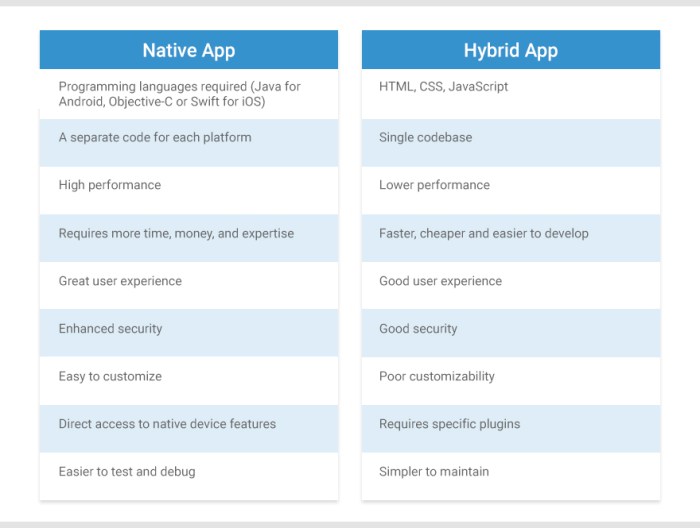
Hybrid mobile app development involves using web technologies like HTML, CSS, and JavaScript to create apps that can run on multiple platforms with a single codebase. On the other hand, native app development involves building separate apps for each platform using specific programming languages like Swift for iOS and Java for Android.
Advantages of Developing Hybrid Mobile Apps
- Cost-effective: Developing a hybrid app can be more cost-effective as it allows for the reuse of code across different platforms.
- Quicker development time: With a single codebase, developers can build and deploy hybrid apps faster than native apps.
- Easy maintenance: Updates and changes can be made to a hybrid app more efficiently since changes need to be made only once for all platforms.
Benefits of Native Mobile App Development
- Better performance: Native apps are known to offer better performance and faster response times compared to hybrid apps.
- Access to native features: Native apps have full access to the device’s features and capabilities, providing a more seamless user experience.
- Enhanced security: Native apps are considered more secure as they follow platform-specific security guidelines and best practices.
Performance Comparison of Hybrid and Native Apps
While hybrid apps offer cross-platform compatibility and cost benefits, native apps excel in performance, user experience, and security. The choice between hybrid and native app development ultimately depends on the project requirements, budget, and timeline.
Mobile App Development
Mobile app development involves several key steps to ensure the successful creation and deployment of an application for mobile devices. From planning and designing to testing and maintenance, each phase plays a crucial role in the development process.
Key Steps in Mobile App Development
- Planning and Research: Define the app’s purpose, target audience, and features.
- Design: Create wireframes and prototypes to visualize the app’s layout and user interface.
- Development: Write code, integrate APIs, and implement functionality based on design specifications.
- Testing: Conduct thorough testing to identify and fix bugs, ensuring the app functions as intended.
- Deployment: Release the app to the app stores and make it available for download by users.
Popular Frameworks in Mobile App Development
- React Native: Allows developers to build cross-platform apps using JavaScript and React.
- Flutter: Google’s UI toolkit for building natively compiled applications for mobile, web, and desktop.
- Xamarin: Microsoft’s framework for building native iOS, Android, and Windows apps using C#.
Importance of User Experience Design
User experience design is crucial in mobile app development as it determines how users interact with the app. A well-designed user interface can enhance user satisfaction, increase engagement, and improve overall usability. It is essential to prioritize user experience to ensure the app’s success in the competitive app market.
Significance of Regular Updates and Maintenance
Regular updates and maintenance are vital in mobile app development to address bugs, introduce new features, and enhance performance. By keeping the app up-to-date, developers can retain users, improve user experience, and stay ahead of the competition. Continuous improvement through updates and maintenance is key to the long-term success of a mobile app.
Software Development
Software development is the process of creating, designing, testing, and maintaining software applications. In the tech industry, software development plays a crucial role in meeting the increasing demand for innovative and efficient solutions to various problems.
Stages of the Software Development Life Cycle
The software development life cycle consists of several stages that ensure the successful development and deployment of software applications. These stages include:
- Requirements Gathering: In this stage, developers gather and analyze the requirements for the software application.
- Design: The design stage involves creating a blueprint or roadmap for the software application based on the gathered requirements.
- Development: Developers write the code for the software application according to the design specifications.
- Testing: Testing is a crucial stage where developers identify and fix any bugs or issues in the software application.
- Deployment: Once the software application is thoroughly tested, it is deployed for use by end-users.
- Maintenance: The maintenance stage involves updating and enhancing the software application to ensure it remains functional and relevant.
Role of Coding Standards in Software Development
Coding standards are guidelines and best practices that developers follow while writing code. These standards help maintain consistency, readability, and quality in the codebase, making it easier to understand and maintain. Adhering to coding standards also promotes collaboration among developers and ensures that the code is scalable and secure.
Importance of Testing and Quality Assurance in Software Development
Testing and quality assurance are essential aspects of software development as they help identify and rectify defects and errors in the software application. Through rigorous testing, developers can ensure that the software meets the specified requirements, functions as intended, and delivers a seamless user experience.
Quality assurance processes also focus on improving the overall quality of the software product, enhancing its reliability, performance, and security.
Cybersecurity
Mobile app development is not just about creating a functional and user-friendly application; it also involves ensuring the security of the app and the data it handles. Cybersecurity plays a crucial role in mobile app development as it protects user information, prevents unauthorized access, and maintains the integrity of the application.
Importance of Cybersecurity in Mobile App Development
Cybersecurity is essential in mobile app development to safeguard sensitive user data and prevent security breaches. Without adequate security measures, mobile apps are vulnerable to various cyber threats that can compromise user privacy and data integrity.
Common Cybersecurity Threats Faced by Mobile Applications
- Malware attacks: Malicious software can infect mobile apps and devices, leading to data theft or unauthorized access.
- Phishing attacks: Cybercriminals may use phishing techniques to trick users into revealing personal information or login credentials.
- Data breaches: Unauthorized access to sensitive user data stored within the app can result in data breaches and privacy violations.
Enhancing Security of Mobile Apps
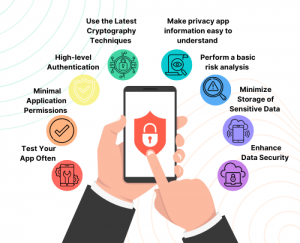
- Regular security updates: Developers should regularly update the app with security patches to address vulnerabilities and enhance security.
- Secure coding practices: Implementing secure coding practices can help prevent common security flaws and vulnerabilities in the app.
- User authentication: Utilizing strong authentication methods like biometrics or two-factor authentication can enhance user security.
Role of Encryption in Ensuring Cybersecurity for Mobile Apps
Encryption plays a critical role in ensuring cybersecurity for mobile apps by securing data transmission and storage. By encrypting sensitive data, developers can protect user information from unauthorized access and maintain data confidentiality.
Mobile Technology
Mobile technology is constantly evolving, with new trends shaping the way we interact with our devices. From faster internet speeds to immersive experiences, the landscape of mobile technology is always changing. In this section, we will explore some of the latest trends in mobile technology and their impact on app development.
5G Technology
G technology is set to revolutionize mobile app development by providing faster speeds and lower latency. This means that apps can load quicker, stream content seamlessly, and provide a more responsive user experience. With 5G, developers have the opportunity to create more data-intensive apps that utilize real-time data processing and high-definition content.
Augmented Reality (AR) and Virtual Reality (VR)
Augmented reality and virtual reality are becoming increasingly popular in mobile apps, offering users immersive experiences like never before. AR overlays digital information onto the real world, while VR creates entirely virtual environments for users to explore. These technologies have the potential to transform industries such as gaming, education, and healthcare, providing new opportunities for engaging and interactive mobile experiences.
Internet of Things (IoT)
The Internet of Things (IoT) refers to the network of interconnected devices that can communicate and share data with each other. In the context of mobile technology, IoT opens up possibilities for smart devices to interact with mobile apps seamlessly.
From smart home devices to wearable technology, IoT integration in mobile apps allows for enhanced connectivity and personalized experiences for users.
Technology & Software
In the realm of mobile app development, technology and software play a crucial role in shaping the user experience and functionality of applications. Let’s delve into the diverse aspects of technology and software in this landscape.
Different Software Development Methodologies
When it comes to software development methodologies, two popular approaches stand out: Agile and Waterfall. Agile methodology focuses on iterative development, allowing for flexibility and quick adaptability to changes in requirements. On the other hand, Waterfall methodology follows a linear sequential approach, with each phase dependent on the deliverables of the previous one.
The choice between these methodologies depends on the project requirements, team dynamics, and desired outcomes.
Future of Technology and Software in Mobile App Development
The future of technology and software in mobile app development is promising, with advancements in areas like Internet of Things (IoT), Augmented Reality (AR), Virtual Reality (VR), and 5G connectivity. These technologies will enable developers to create more immersive and engaging experiences for users, pushing the boundaries of what is possible in mobile app development.
Role of Artificial Intelligence (AI) and Machine Learning in Software Development
Artificial Intelligence (AI) and Machine Learning are revolutionizing software development by automating tasks, improving decision-making processes, and enhancing user interactions. AI-powered algorithms can analyze data patterns, predict user behavior, and personalize app experiences. Machine Learning, on the other hand, enables systems to learn from data and make intelligent decisions without explicit programming.
The integration of AI and Machine Learning in software development will continue to drive innovation and efficiency in mobile app development.
Significance of Open-Source Software in the Tech Industry
Open-source software plays a vital role in the tech industry by fostering collaboration, innovation, and transparency. Developers can access, modify, and distribute open-source code freely, accelerating the development process and reducing costs. Open-source projects like Linux, Apache, MySQL, and PHP have become foundational elements of software development, powering a wide range of applications and services.
The community-driven nature of open-source software promotes knowledge-sharing and collective improvement, making it an invaluable asset in the tech industry.
Web Development
Web development is the process of creating websites and web applications that are accessible through internet browsers. It involves building and maintaining websites to ensure they function properly and provide a seamless user experience.Responsive design is crucial in web development as it allows websites to adapt to different screen sizes and devices, ensuring that users have a consistent experience across all platforms.
By using responsive design techniques, web developers can create websites that look and perform well on desktops, laptops, tablets, and smartphones.
APIs in Web Development
APIs (Application Programming Interfaces) play a vital role in connecting web applications to mobile apps. They allow different software systems to communicate with each other and share data, enabling seamless integration between web and mobile platforms. By using APIs, developers can access data and functionality from external sources, enhancing the overall user experience.
- APIs enable developers to retrieve data from external databases or services and display it on a website.
- They facilitate real-time updates and synchronization between web and mobile applications, ensuring that users always have access to the latest information.
- APIs also allow developers to implement features such as social media integration, payment gateways, and geolocation services in web applications.
Progressive Web Apps (PWAs)
Progressive Web Apps (PWAs) are a type of web application that combines the capabilities of traditional websites with the functionality of native mobile apps. PWAs are designed to work on any device or platform and provide an app-like experience to users without the need to download or install anything.
- PWAs use modern web technologies to deliver fast loading speeds, offline access, and push notifications, making them a popular choice for businesses looking to create engaging web experiences.
- They can be added to the user’s home screen and accessed directly from the browser, blurring the line between web and mobile applications.
- PWAs are cost-effective and easy to maintain, as they do not require separate development for different platforms and can be updated in real-time.
Networking
Networking plays a crucial role in mobile app development, especially in ensuring seamless communication between the app and external servers or services. It also involves implementing robust security measures to protect user data and maintain the app’s integrity.
Importance of Network Security
Network security is vital in mobile app development to safeguard sensitive user information from cyber threats and unauthorized access. Implementing encryption protocols, secure authentication methods, and regular security updates are essential to mitigate risks and ensure user trust.
Role of APIs in Networking
- APIs (Application Programming Interfaces) serve as the intermediary for communication between the mobile app and external servers or services.
- They enable seamless data exchange, integration of third-party functionalities, and access to cloud services, enhancing the app’s capabilities and user experience.
- Properly implementing APIs ensures efficient networking and interoperability, enabling the app to leverage various services and resources.
Cloud Networking Impact
- Cloud networking involves leveraging cloud-based infrastructure and services for app data storage, processing, and communication.
- It offers scalability, flexibility, and cost-effectiveness, allowing apps to adapt to changing demands and easily scale resources as needed.
- Cloud networking also facilitates seamless data synchronization, real-time updates, and improved accessibility across different devices, enhancing user experience.
Challenges of Optimizing App Performance
Optimizing app performance over various network conditions poses challenges such as:
- Dealing with slow or unstable network connections that can affect app responsiveness and loading times.
- Adapting to different network bandwidths and latency levels to ensure consistent user experience across diverse network environments.
- Implementing efficient caching mechanisms, data compression techniques, and network optimization strategies to improve app performance and minimize data usage.
Gaming Hardware
When it comes to developing mobile gaming apps, having the right hardware is crucial to ensure optimal performance and user experience. In this section, we will explore the hardware requirements for mobile gaming apps, discuss the latest advancements in gaming hardware for mobile devices, explain the importance of graphics processing units (GPUs), and detail the role of virtual reality (VR) headsets in enhancing the gaming experience.
Hardware Requirements for Mobile Gaming Apps
- Powerful processor to handle complex calculations and graphics rendering.
- High-resolution display for crisp and detailed graphics.
- Ample storage space to accommodate large game files and updates.
- Responsive touch screen for smooth and accurate gameplay.
Advancements in Gaming Hardware for Mobile Devices
- Introduction of dedicated gaming smartphones with specialized hardware for gaming performance.
- Integration of advanced cooling systems to prevent overheating during intensive gaming sessions.
- Enhanced battery life to support extended gameplay without frequent recharging.
Importance of GPUs in Mobile Gaming
Graphics processing units (GPUs) play a crucial role in mobile gaming by handling complex graphics calculations and rendering high-quality visuals in real-time. A powerful GPU ensures smooth gameplay, realistic graphics, and immersive gaming experiences for users.
Role of VR Headsets in Enhancing Gaming Experience
Virtual reality (VR) headsets offer an immersive gaming experience by transporting players into a virtual world where they can interact with the environment in a more realistic and engaging way.
By providing a 360-degree view and tracking head movements, VR headsets enhance the sense of presence and immersion in games, making the gaming experience more dynamic and interactive.
Smart Technology
Smart technology refers to devices or systems that have the ability to learn and adapt to user preferences, making them more intuitive and efficient. In mobile app development, smart technology plays a crucial role in enhancing user experience by providing personalized and context-aware features.
Integration of Smart Technology with Mobile Apps
Smart technology can be integrated into mobile apps through various means, such as sensors, data analytics, and machine learning algorithms. By leveraging these technologies, mobile apps can offer predictive capabilities, real-time recommendations, and automated processes based on user behavior.
- Utilizing sensors: Mobile apps can access data from device sensors like GPS, accelerometer, and gyroscope to gather information about user activities and surroundings.
- Data analytics: By analyzing user data and interactions within the app, developers can gain insights to improve features, personalize content, and optimize user engagement.
- Machine learning algorithms: Implementing AI-powered algorithms enables mobile apps to predict user preferences, automate tasks, and provide intelligent recommendations.
Role of Artificial Intelligence (AI) in Smart Technology
Artificial Intelligence plays a central role in powering smart technology by enabling machines to learn from data, recognize patterns, and make decisions without human intervention. In mobile apps, AI can enhance user interactions, streamline processes, and deliver personalized experiences through features like chatbots, image recognition, and predictive analytics.
| Chatbots: AI-powered chatbots can provide instant customer support, answer queries, and assist users in navigating through the app. |
| Image Recognition: AI algorithms can analyze images uploaded by users, enabling features like visual search, augmented reality, and photo editing. |
| Predictive Analytics: AI can analyze user data to predict future behavior, recommend products, and personalize content for each user. |
Benefits of Incorporating Smart Technology into Mobile Apps
Integrating smart technology into mobile apps offers several benefits, including enhanced user engagement, improved efficiency, and competitive advantage in the market. By leveraging smart technology, mobile apps can provide a more personalized experience, streamline processes, and adapt to user preferences in real-time.
Smart technology in mobile apps enables developers to create innovative features that anticipate user needs, enhance usability, and deliver a seamless user experience.
Final Conclusion
In conclusion, this discourse on hybrid vs native mobile app development sheds light on the diverse facets of software creation and cybersecurity, as well as the evolving trends in mobile technology and the impact of AI and machine learning. Embracing the future of technology, this guide paves the way for innovation and excellence in the mobile app development arena.
Top FAQs
What are the key differences between hybrid and native mobile app development?
Hybrid apps are developed using web technologies like HTML, CSS, and JavaScript, while native apps are built for specific platforms like iOS or Android using platform-specific languages.
What are the advantages of developing hybrid mobile apps?
Hybrid apps offer cross-platform compatibility, faster development cycles, and easier maintenance compared to native apps.
Why is user experience design important in mobile app development?
User experience design ensures that the app is intuitive, easy to use, and provides a seamless experience for users, leading to higher engagement and satisfaction.
How can developers enhance the security of mobile apps?
Developers can enhance app security by implementing encryption, using secure coding practices, and regularly updating the app to patch vulnerabilities.